From snow-capped volcanoes to crystal-clear seas, Japan packs an astonishing variety of landscapes into one small country. Whether you love mountains, quiet villages, or tropical water, these five scenic spots deserve a place on your itinerary.
Prices and schedules in this guide are as of October 2026. They can change, so please check the official websites before you go.
1. Mount Fuji and Lake Kawaguchiko (Yamanashi)
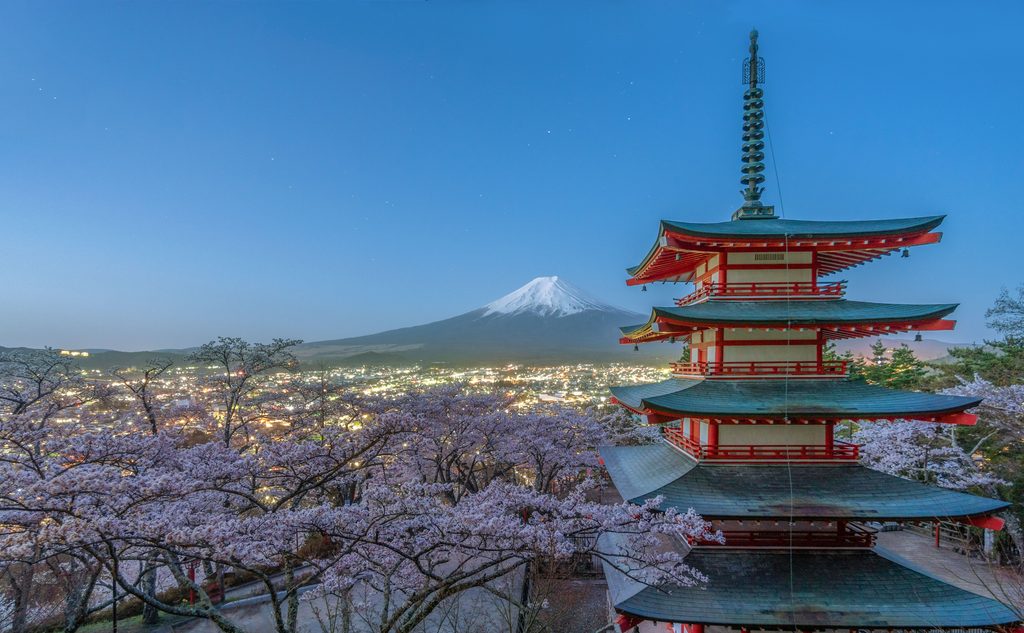
Mount Fuji needs no introduction, but where you see it from makes all the difference. The area around Lake Kawaguchiko and Fujiyoshida offers some of the best views, with the mountain reflected in the lake on calm days.
If you ask me where the most beautiful view of Mount Fuji is, my answer is Arakura Fuji Sengen Shrine in Fujiyoshida. A red five-story pagoda stands in the foreground with Fuji rising behind it, and to me it is simply the best Fuji view there is. It felt on another level when I saw it with my own eyes — one of those scenes that photographs can only partly capture.
Before you leave Yamanashi, try Yoshida udon. It may not be as well known abroad as ramen or soba, but it is a true local favorite: thick, wonderfully firm and chewy noodles, often topped with cabbage and served with a spicy chili paste at small shops around Fujiyoshida. It is the kind of lunch you will only find done this way here.
Quick info
- Access: Take the Fujikyu Railway to Shimoyoshida Station (about 15 minutes by train from Kawaguchiko Station). From the station, it is a 10 to 20 minute walk to the shrine and the start of the stairs. The climb to the pagoda is about 400 steps.
- Cost: Free. There is no entrance fee for Arakurayama Sengen Park or the pagoda, and the park is open 24 hours.
- Best time: Spring for cherry blossoms (around April) and autumn for fall colors. Winter often gives the clearest views of Fuji.
2. Kamikochi (Nagano)
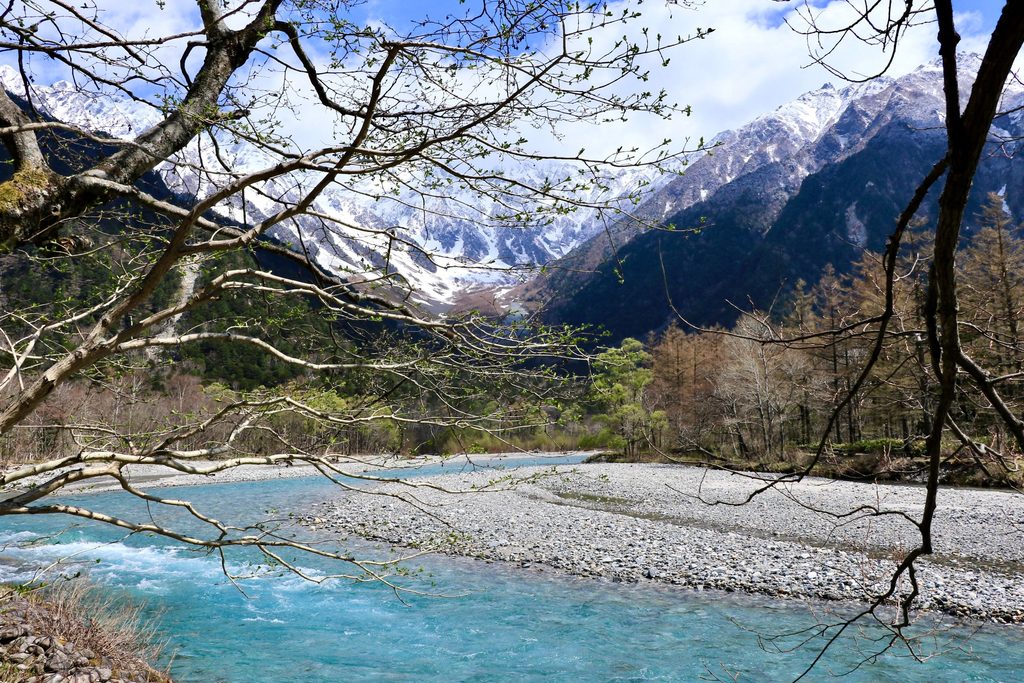
Kamikochi is a highland valley in the Japan Alps, where a clear river winds between jagged mountain peaks. A gentle walk along the Azusa River takes you past Kappa Bridge and Taisho Pond, where the mountains reflect on the still water. The fall colors in October are especially beautiful. Private cars are not allowed into the valley, so most visitors arrive by bus or taxi, which helps keep the area peaceful and unspoiled.
Quick info
- Access: From Matsumoto Station, take the Alpico Kamikochi Line to Shin-Shimashima Station (about 30 minutes), then a bus to Kamikochi (about 65 minutes). Buses on this route require advance reservations. If you come by car, park at Sawando and take the shuttle bus (about 30 minutes, around ¥1,600 one way).
- Cost: Free to enter. Budget roughly ¥3,000 for the bus from Shin-Shimashima, plus the train fare.
- Best time: The 2026 season runs from April 17 to November 15, and the valley is closed in winter. October is the best month for autumn colors.
3. Shirakawa-go (Gifu)
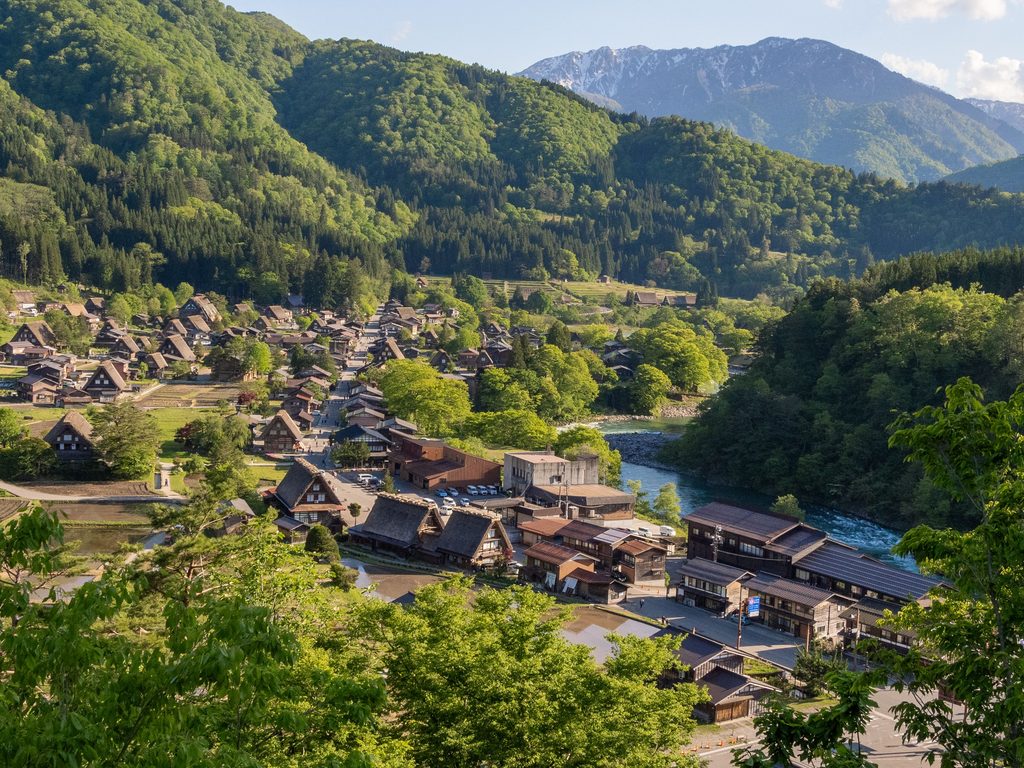
Shirakawa-go is a UNESCO World Heritage village famous for its gassho-zukuri farmhouses, whose steep thatched roofs resemble hands pressed together in prayer. The village looks like a postcard in every season: fresh green in summer, golden in autumn, and blanketed in snow in winter. For the best panorama, walk up to the observation deck above the village. If you plan to visit in winter, check ahead for the special evening light-up events, which usually require advance reservations.
Quick info
- Access: About 50 minutes to 1 hour by express bus from Takayama, or about 1 hour 20 minutes from Kanazawa. The bus terminal is a short walk from the village.
- Cost: Walking around the village is free. Parking fees apply if you drive.
- Best time: Winter for the snowy scenery, or autumn for the colors. Summer is lovely and green.
4. Blue Pond (Biei, Hokkaido)
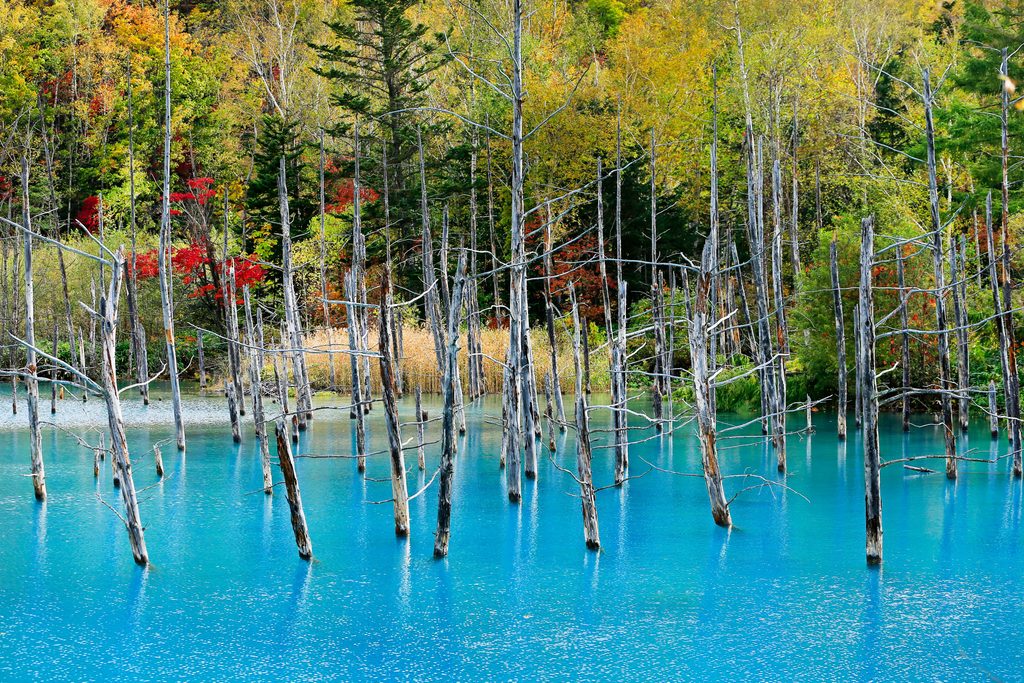
Blue Pond near the town of Biei is known for its vivid, milky-blue water, which can look different depending on the light, the weather, and the season. It was created as a by-product of a volcanic mudflow control project, which makes its beauty even more unexpected. Visit on a clear, calm morning for the best color, and combine it with a drive through the rolling hills of Biei and Furano for a classic Hokkaido scenic day.
Quick info
- Access: About 20 minutes by Dohoku Bus from JR Biei Station, or about 20 minutes by car. The bus stop is a short walk from the pond.
- Cost: Free to visit. Parking costs about ¥500 per car.
- Best time: Mid-May to mid-June for the bluest water, and in the morning when the wind is calm. In winter, the trees around the pond are lit up, though the access road may close in bad weather.
5. Okinawa
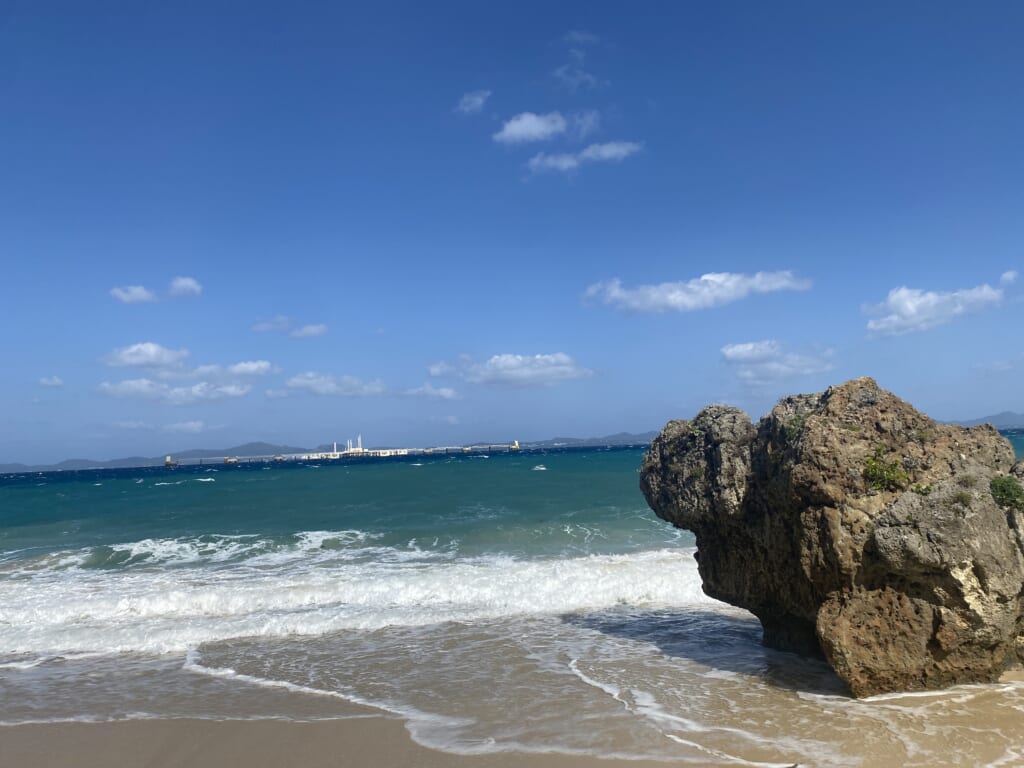
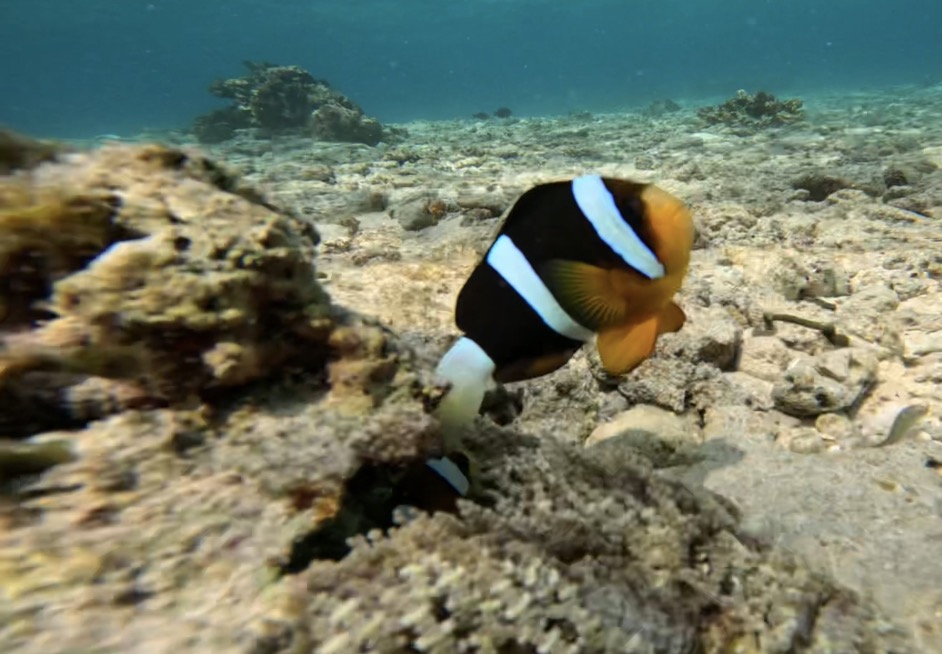
Okinawa is one of the most popular travel destinations in Japan, and for good reason. Wherever you look, the sea is a beautiful shade of blue. I have visited Okinawa twice, once on a high school trip and once with friends in college, and I explored many areas, including Naha, the Churaumi Aquarium area, and Uruma City. Snorkeling was a highlight: just a short swim from the shore, colorful fish were swimming right below me in clear water. Marine sports such as snorkeling are easy to try even for beginners, with plenty of tours available.
In Uruma City, we stayed at a cottage right in front of the sea. There was nobody else on the beach except for us, and the water was beautifully clear. It felt like our own private beach.
Beyond the main island, Okinawa also has smaller islands with striking views, such as the bridge to Kouri Island. We will cover the islands and resorts in more detail in a separate guide.
Quick info
- Access: Fly to Naha Airport. From Tokyo Haneda, the flight takes about 2 hours 40 minutes to 3 hours.
- Cost: Snorkeling tours range from about ¥4,000 to ¥12,000, depending on the area and length. Full-day trips to the Kerama Islands are usually around ¥10,000 to ¥12,000.
- Best time: Late spring through early autumn is good for the sea. The rainy season usually falls from late May to June.
Where to Stay
Each of these spots has a different base town. For Mount Fuji, stay around Lake Kawaguchiko. For Kamikochi, Matsumoto is a convenient gateway, or you can book a lodge inside the valley. For Shirakawa-go, Takayama and Kanazawa are the most popular bases. For Blue Pond, look at Biei, Furano, or Asahikawa. For Okinawa, Naha is the easiest starting point, with airport access and plenty of hotels.